


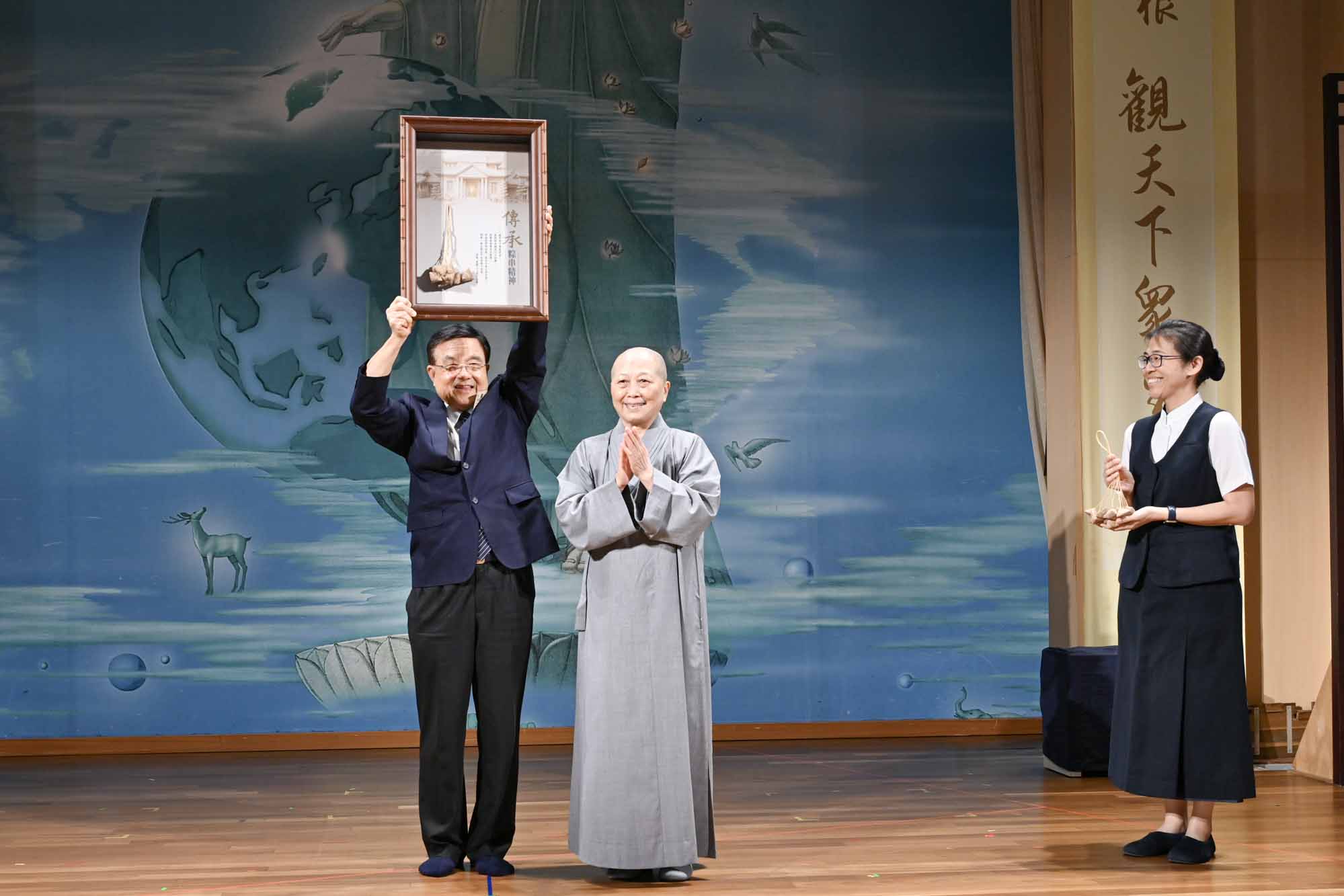
 Master De Dun presented a string of dumplings on behalf of Dharma Master Cheng Yen. Through this symbolic gesture, Dharma Master Cheng Yen encouraged her disciples to remain firmly connected to the Dharma lineage, continually take the Dharma to heart and practise with the same diligence as when they first began. (Photo by Pua Poo Toong)
With the Thirty-Seven Aids to the Way as a key to a deeper understanding of the Buddha Dharma, Beh Keng Hua, Managing Director of Tzu Chi Merit (Singapore), encouraged participants at the camp’s opening ceremony to reach out to people and promote the Bodhisattva path. “Believe in yourself, believe in Master Cheng Yen, and, above all, make vows,” he urged.
The three-day, two-night 4-in-1 Cadre Camp took place at Jing Si Hall from 18 to 20 September, bringing together more than 300 participants and mobilising over 200 staff members to support the camp. Centred on the Thirty-Seven Aids to the Way, this year’s camp featured teachings by monastics from Jing Si Abode, experience-sharing sessions with speakers from Taiwan, experiential learning activities, and small-group interactions. Through listening, reflection and practice, volunteers were guided towards a deeper understanding of the Dharma, learning to integrate the teachings into daily life as they took on various responsibilities and to bring what they had learned back to their communities.
The camp invited four monastics from Jing Si Abode in Taiwan—Master De Dun, Master De Qing, Master De Di and Master De Tai—to conduct sessions, along with nine volunteer speakers from Kaohsiung and Pingtung, Taiwan.
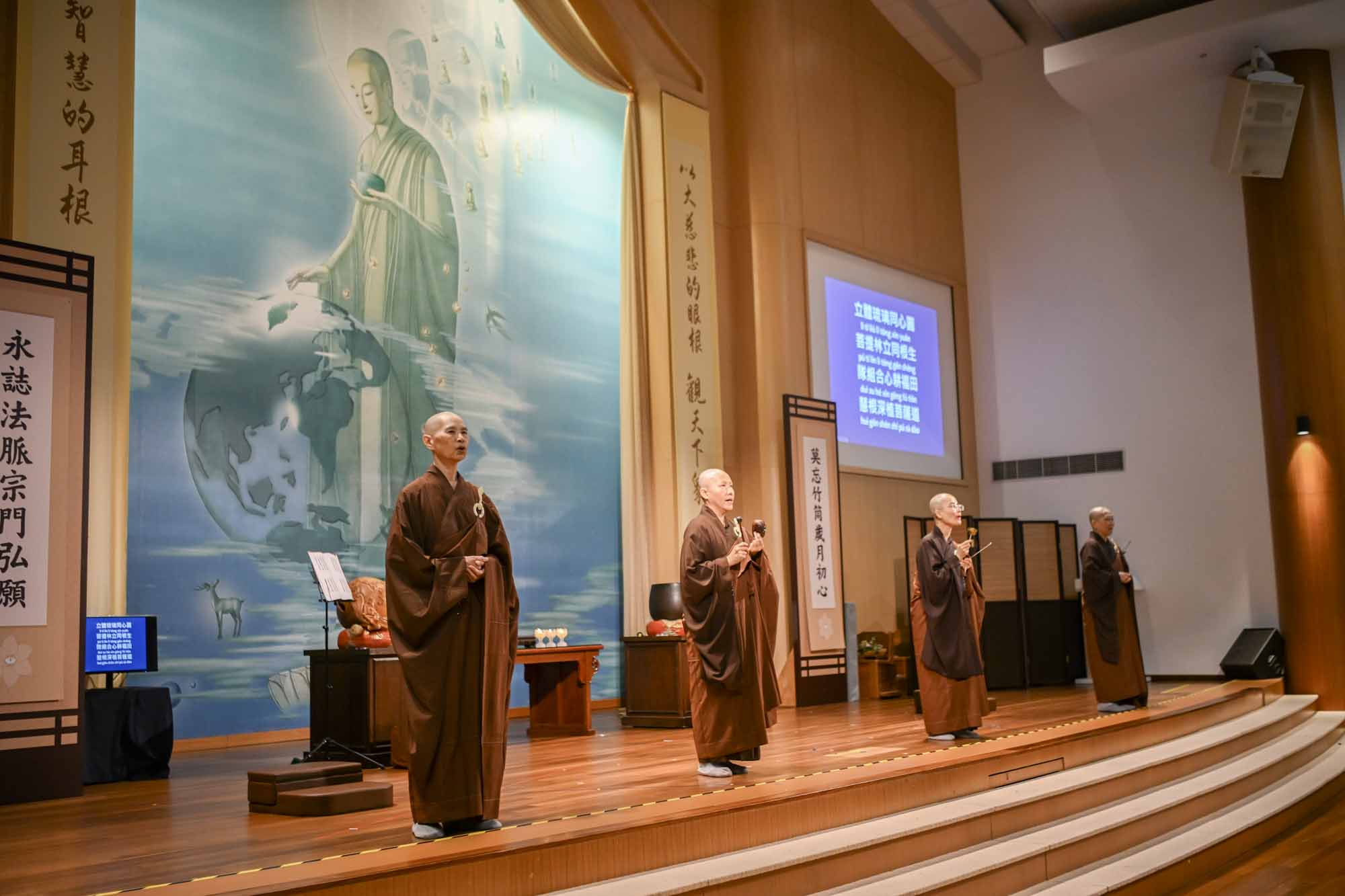 During the Dharma practice session, the Jing Si monastics led participants in making vows through prostrations and circumambulating the Buddha and the Dharma. (Photo by Chai Yu Leong)
“Wherever there are people, there will be similar challenges,” said Wang Chih Chung, a speaker from Pingtung. While volunteers across different regions face many similar challenges, their approaches and way of thinking often differ. This makes learning from one another through exchanges all the more necessary. “Reflect mindfully, and you will find the Dharma all around you.” He believes that volunteers need to continually listen to the Dharma and internalise its teachings so that they can draw strength from them when taking on responsibilities and facing challenges.
Responding to Volunteers’ Needs Through Thoughtful Curriculum Planning
The inspiration for the camp’s theme came not only from feedback from previous participants, but also from the practical needs of volunteers in Singapore.
The curriculum team began preparations as early as April this year. Chew Sio Peng, head of the curriculum team, led the team in engaging community group leaders to gain a deeper understanding of the challenges and needs volunteers encountered when taking on responsibilities. These insights were then used to shape the session topics and delivery methods. The team also worked closely with Tzu Chi’s Religious Affairs Department in Taiwan to refine the curriculum.
The curriculum was also designed to bring out the speakers’ strengths. Shu Yuan, a Jing Si Lay Practitioner from Tzu Chi’s Religious Affairs Department in Taiwan, explained that, in addition to selecting volunteers with practical experience to share their insights, the team helped the speakers organise their content so that both their personal experiences and the essence of the Dharma they had learned could be conveyed more effectively. Small-group discussions were also incorporated into the sessions, giving participants the opportunity not only to listen, but also to ask questions, exchange views and share their own experiences.
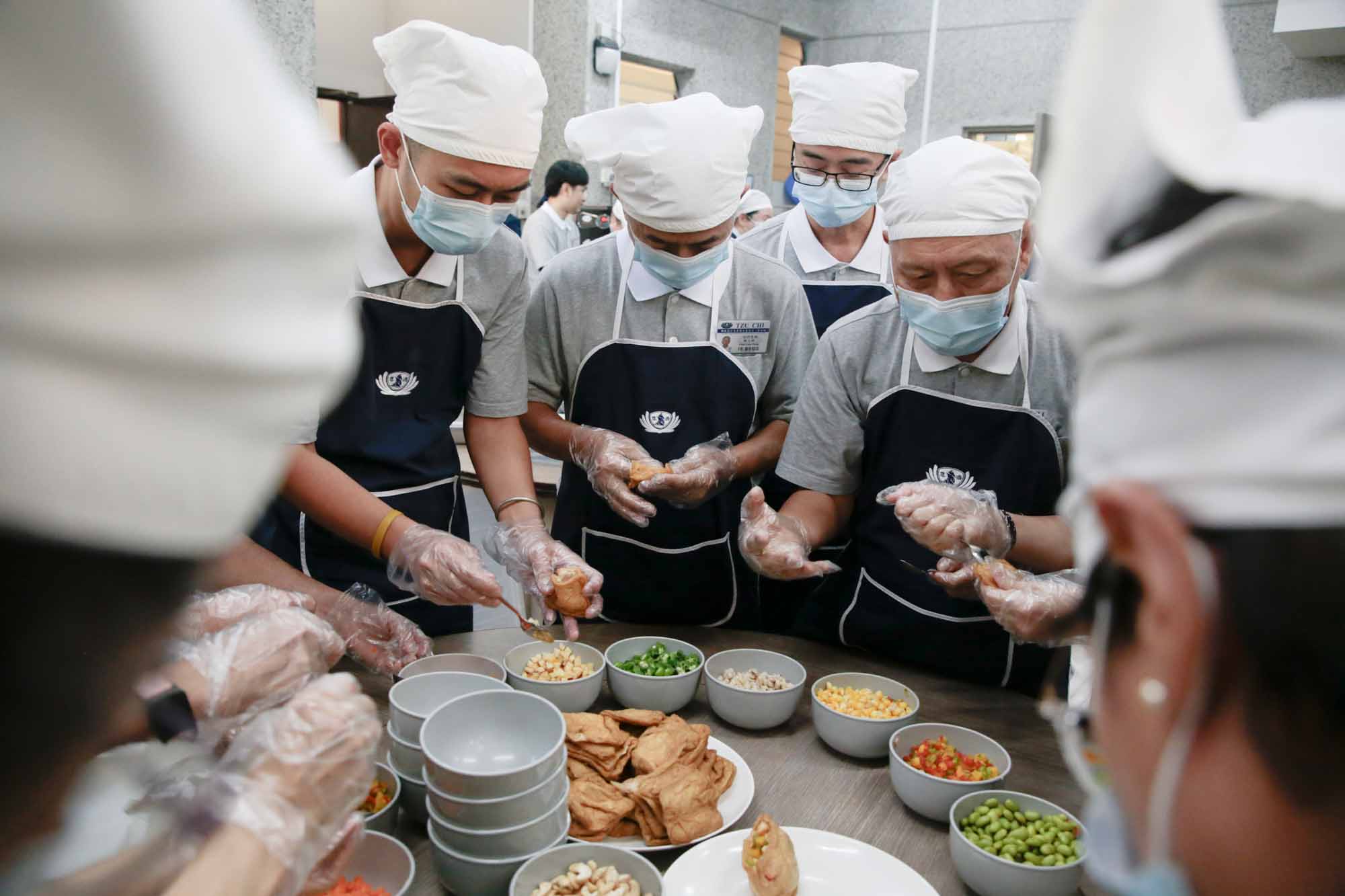 Participants prepare their own supper as part of a hands-on session that allows them to experience the work of different functional teams. (Photo by Fong Kwai Kin)
Hsu Tun Ying, Singapore’s Unity Team Volunteer Development Coordinator, shared that this year’s camp featured “Keepsakes that Bring the Dharma to Mind”, functional team experiential sessions, and exchanges on lessons learned from the courses. During the “Keepsakes that Bring the Dharma to Mind” sessions, selected volunteers were invited to share one or two meaningful objects that embodied their personal connections with Tzu Chi. As they reflected on their journeys, these keepsakes helped them reconnect with their initial aspirations.
Through the functional-team sessions, participants joined the various teams and took part in preparing meals, cleaning and tidying the premises, setting up the venue, and organising supplies. Through this experience of “learning by doing”, they gained a deeper appreciation for the care and effort of those working behind the scenes, while also understanding the importance of supporting one another and helping each other succeed.
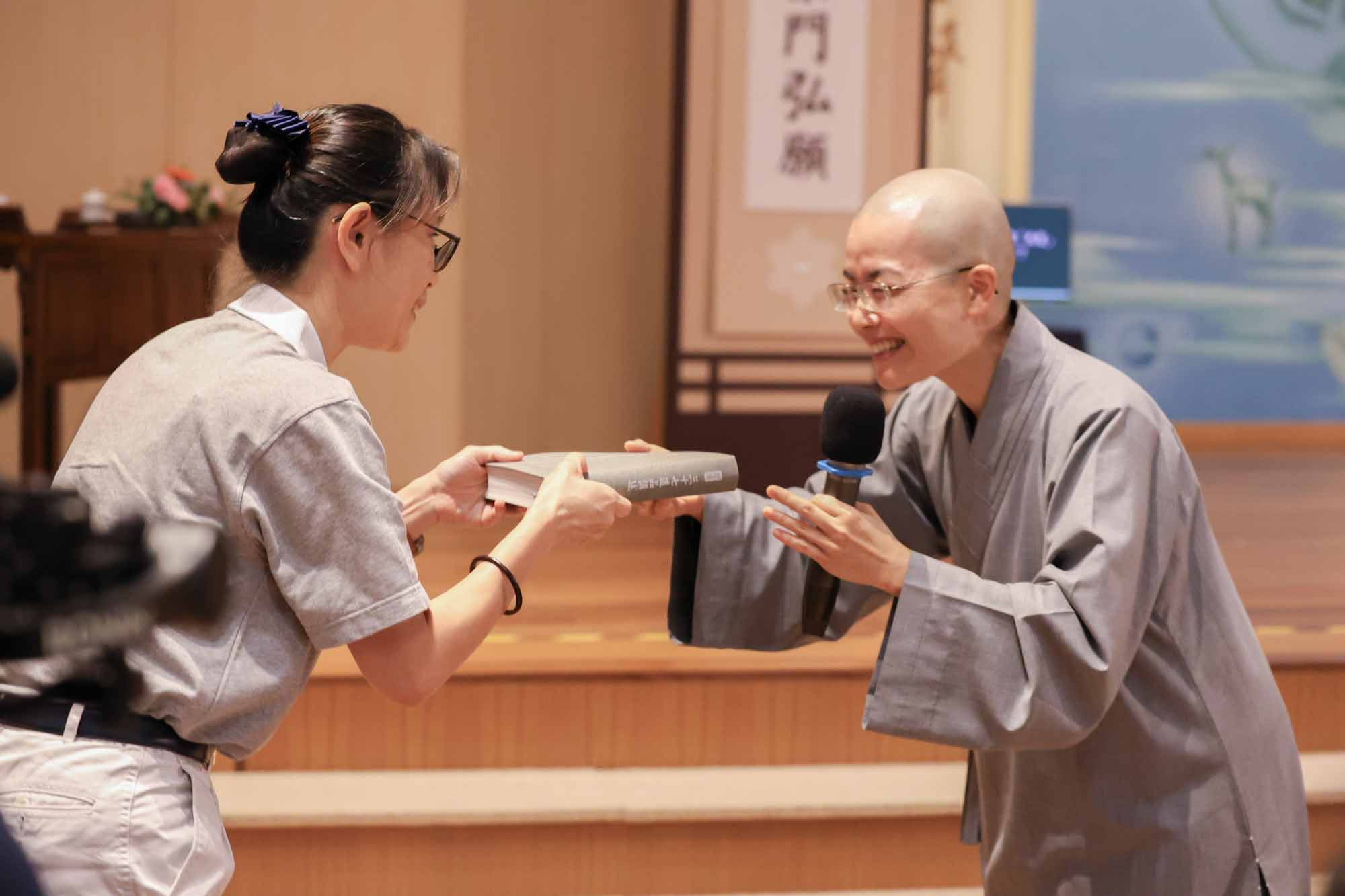 During the session on the Noble Eightfold Path, Master De Di presents affinity gifts to participants who bravely answer questions. (Photo by Chua Hui Ming)
The Thirty-Seven Aids to the Way, also known as the Thirty-Seven Practices to Enlightenment, the Thirty-Seven Stages of the Path, and the Thirty-Seven Factors of Enlightenment, form an important foundation for Buddhist practice. As Dharma Master Cheng Yen has taught, all spiritual cultivation should be grounded in these thirty-seven practices.
At the camp, Master De Tai explained that the Thirty-Seven Aids to the Way is not exclusive to any single scripture; rather, it may be regarded as one of the core teachings of the Samyukta Agama Sutra. These aids are organised into seven groups: the Four Foundations of Mindfulness, the Four Right Efforts, the Four Means of Fulfillment, the Five Spiritual Faculties, the Five Strengths, the Seven Factors of Awakening, and the Noble Eightfold Path. Together, they guide practitioners step by step, from contemplating the body and mind and practising diligently to cultivating awareness and putting the right path into practice.
Master De Tai further explained that “thirty-seven” refers to the Thirty-Seven Factors of Enlightenment, or the thirty-seven methods that help practitioners progress towards enlightenment. The Chinese character dao (道), meaning “the Way” refers to the path leading to awakening, liberation, and nirvana, while pin (品) refers to the systematic classification of these factors and their methods of practice.
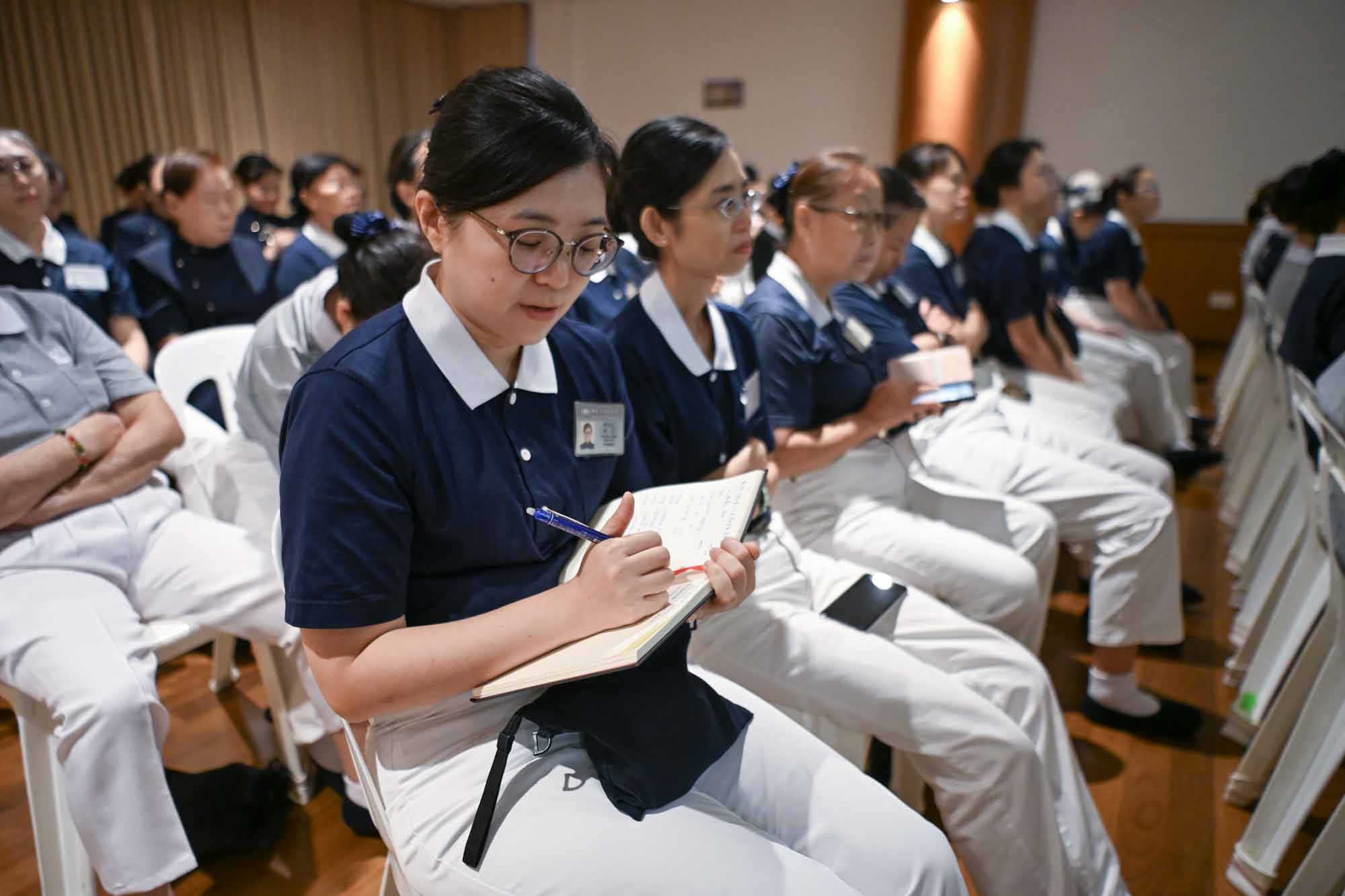 Participants listen attentively to the Dharma and diligently take notes, committing what they hear and learn to heart. (Photo by Chai Yu Leong)
From Listening to the Dharma to Taking Responsibility
From Inner Reflection to Serving Others
First-time participant Low Jwee Poh said that the camp helped him understand what it means to “cultivate the mind inwardly and put the teachings into practice outwardly”. “Once you have cultivated your mind, you can put it into action.” He believes that spiritual practice begins with adjusting one’s thoughts, letting go of greed, anger, and ignorance, and consistently putting the teachings into practice, rather than allowing cultivation to depend on a passing burst of enthusiasm. Through interacting with others and in taking on team responsibilities, he also came to appreciate the importance of benefiting others. By being considerate and giving others opportunities to contribute their strengths, he believes, one can form positive affinities and foster harmony within the team.
For experienced volunteers, the camp also offered an opportunity to return to the role of a learner. Ong Thien Hwee, who was certified as a Tzu Chi volunteer 15 years ago, temporarily stepped down from his leadership roles in volunteer training and charity work a few years ago because of family and work commitments. Yet his daily practice of listening to the early-morning Dharma teachings, known as “Dharma Incense Permeation at Dawn”, has never ceased, and he still occasionally joins fellow volunteers on home visits.
He said that attending the camp helped him reconnect with his original aspiration and rediscover the simplicity and joy of learning. The training sessions resonated deeply with him, particularly the approaches of “turning resistance into motivation”, “seizing opportunities”, and “facing impermanence”. These encouraged him to reflect anew on his attitudes towards people, matters, and circumstances.
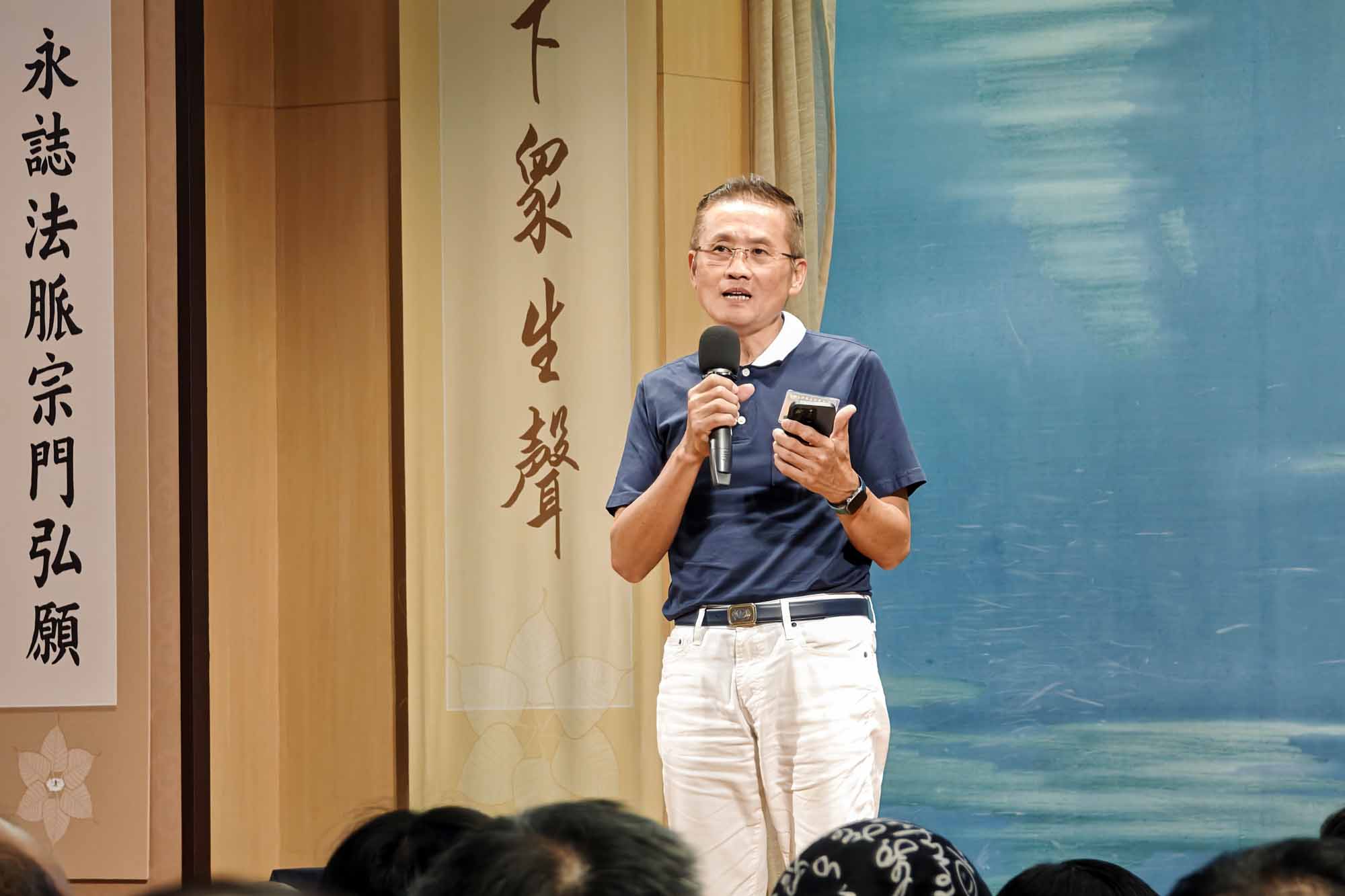 Ong Thien Hwee shared that the camp has helped him reconnect with his original aspiration and rediscover the simplicity and joy of learning. (Photo by Tew Yu Rui)
Yen Pui Yee, who attended the 4-in-1 Cadre Camp for the second time, shared that listening to the three monastics recount the circumstances and personal journeys that led them to join Tzu Chi and aspire to monastic life helped her realise that spiritual practice is not a one-time decision, but a path that requires long-term perseverance.
From last year’s “I am here; I take responsibility” to this year’s “Awakening through Shouldering Responsibilities”, she came to realise that taking responsibility means more than simply completing tasks. “Enthusiasm alone is not enough to keep you walking the Tzu Chi path,” she said. Faith, the strength of one’s vows, action and perseverance are also essential to remaining true to one’s original aspiration and continuing along the Bodhisattva Path.
A Dharma Affinity That Has Lasted for 33 Years
The three-day, two-night 4-in-1 Cadre Camp came to a fulfilling close on the afternoon of 20 September. At the closing ceremony, ten participants shared their learning experiences with heartfelt sincerity, filling the hall with gratitude and Dharma joy. In a special performance, 14 members of the Tzu Chi Faith Corps presented “A World of a Thousand Hands” through graceful and dignified sign language, bringing the atmosphere to a climax and drawing thunderous applause.
-
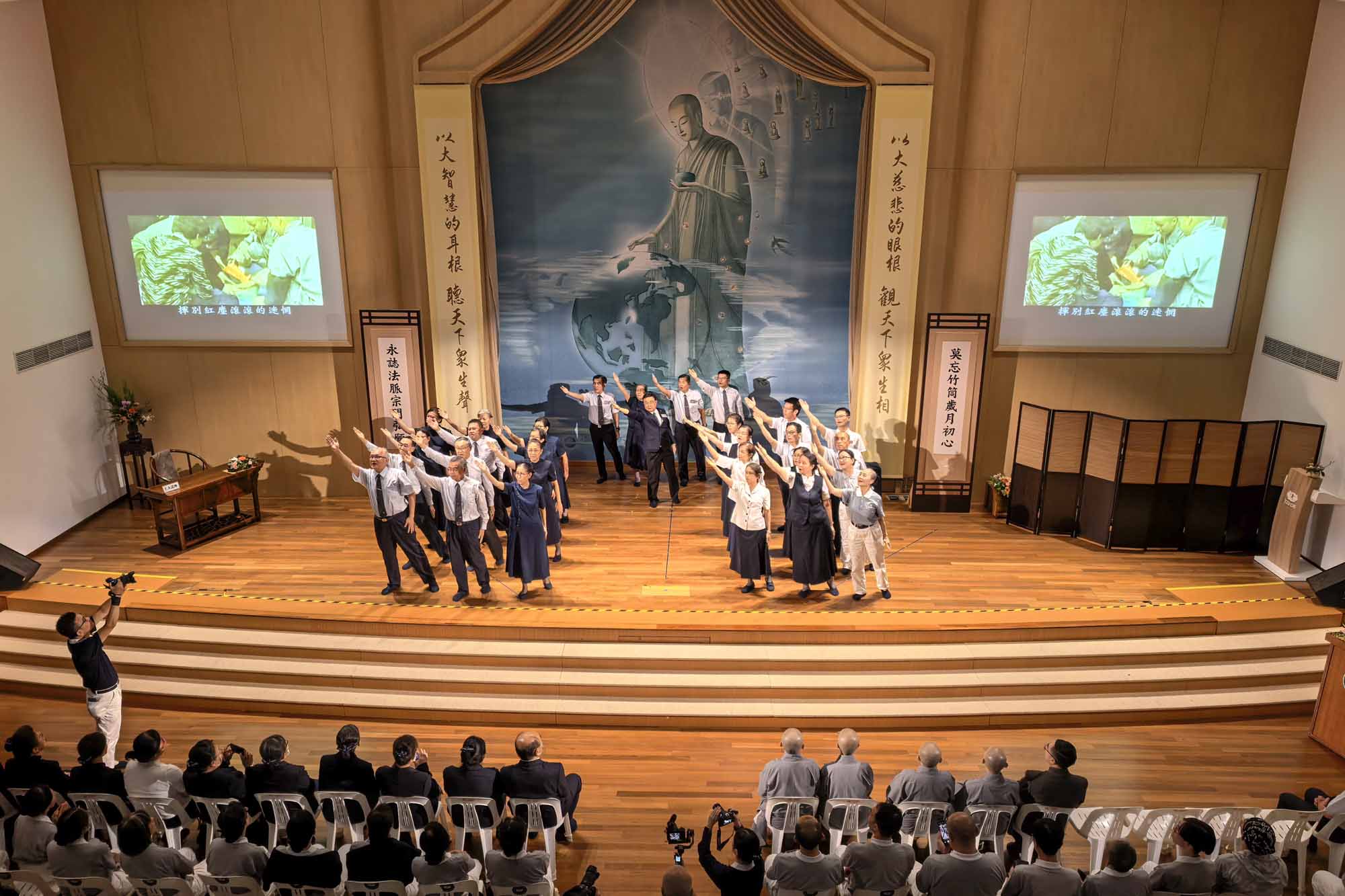 Staff and volunteers perform the song “Direction” at the closing ceremony, giving voice to their shared aspirations. (Photo by Lai Tong Heng)
-
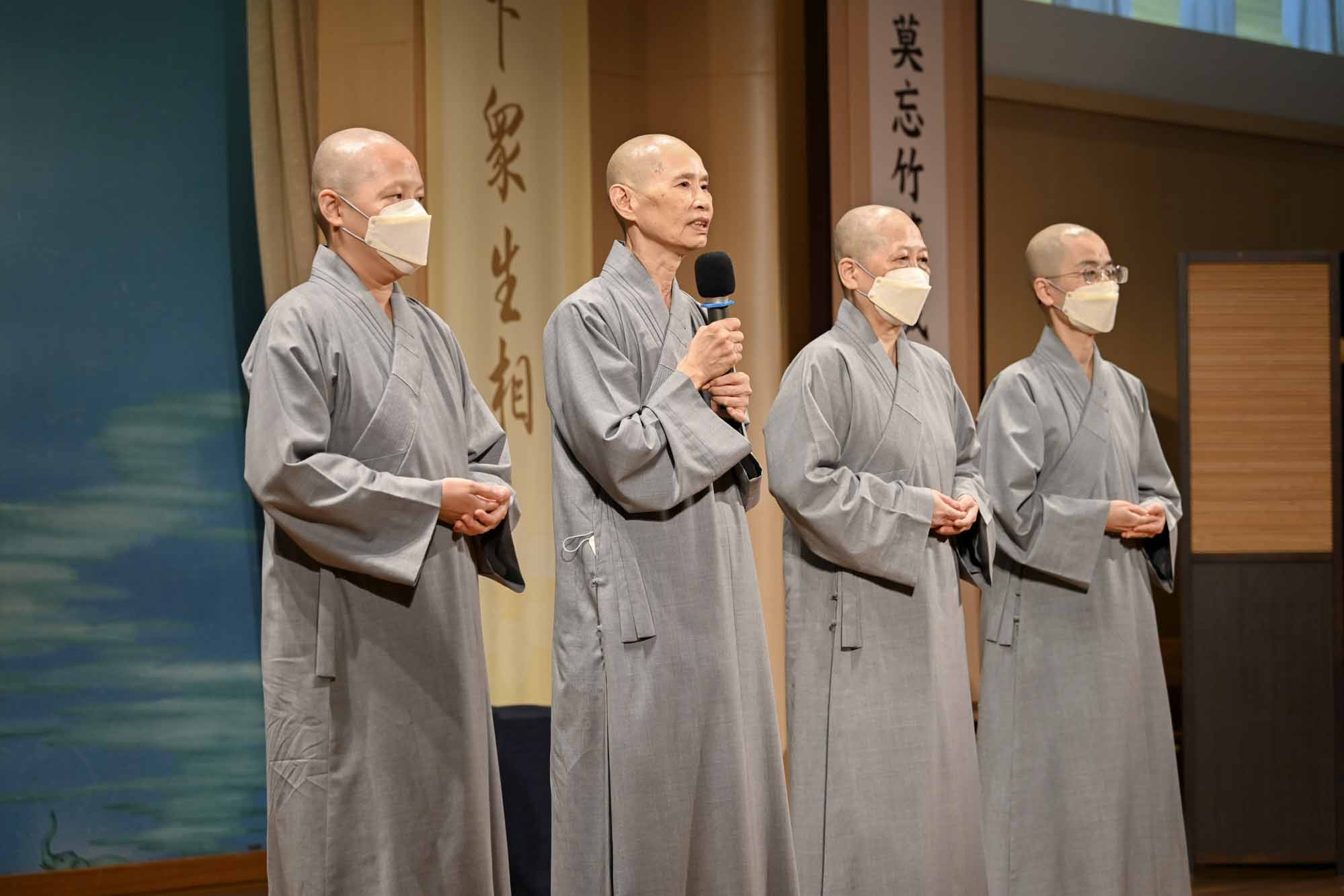 At the closing ceremony, Master De Qing, speaking as a representative, offers loving words of encouragement to the volunteers of the Singapore branch. (Photo by Pua Poo Toong)
-
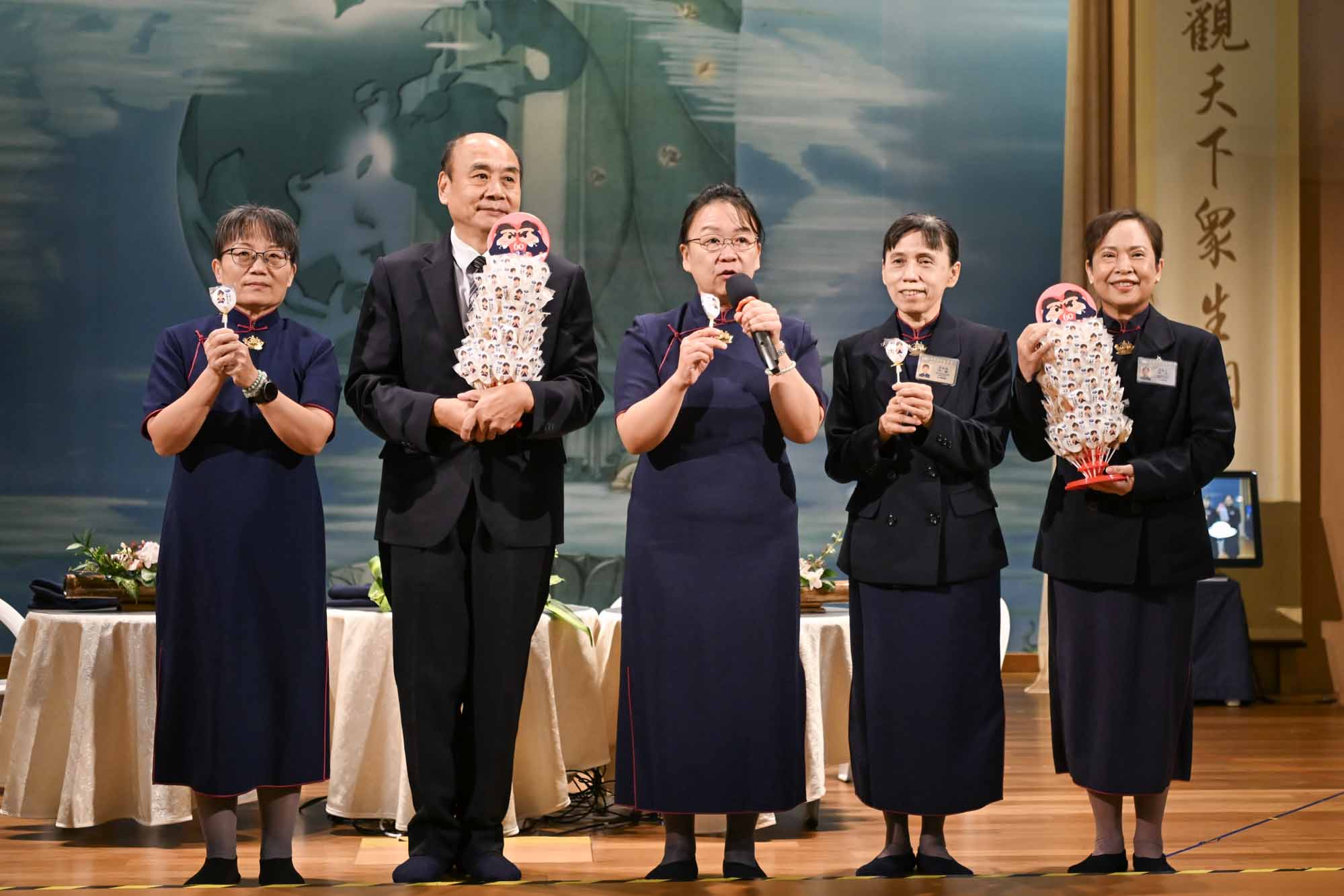 Speakers from Taiwan give specially made lollipops to participants and staff members, symbolising both the process of learning to work together and the sweetness of giving. They encourage volunteers to support one another and move forward together on the Bodhisattva path. (Photo by Chai Yu Leong)
Low See Seh, CEO of Tzu-Chi Foundation (Singapore), and Lew Loon Keong, Deputy CEO, each delivered remarks, expressing gratitude to all staff and participants for their wholehearted dedication and contributions. On behalf of Master Cheng Yen, Master De Dun passed on a string of rice dumplings as a symbol of the Dharma lineage, encouraging disciples in Singapore to courageously shoulder the mission of carrying Tzu Chi’s work forward. Through the symbolism of dumplings tied together on a string, Dharma Master Cheng Yen hopes that each disciple will remain firmly connected to the thread of the Dharma lineage, continually take the Dharma to heart and practise with the same diligence as when they first began.
As Tzu Chi in Singapore marks 33 years, the occasion symbolises the continuation of Tzu Chi’s mission for generations to come. Continuing to spread the Tzu Chi School of Buddhism in the Lion City and carrying forward the spirit of the Dharma lineage require every Tzu Chi volunteer to share in the responsibility. At the close of the ceremony, staff and volunteers came together in harmony and mutual support to perform the song “Direction”. Their voices expressed a shared aspiration and renewed strength to move forward: to remain true to one’s original aspirations and steadfast in one’s direction, to carry on Tzu Chi’s work hand in hand, and to keep the spirit of the Dharma lineage flourishing in the Lion City.
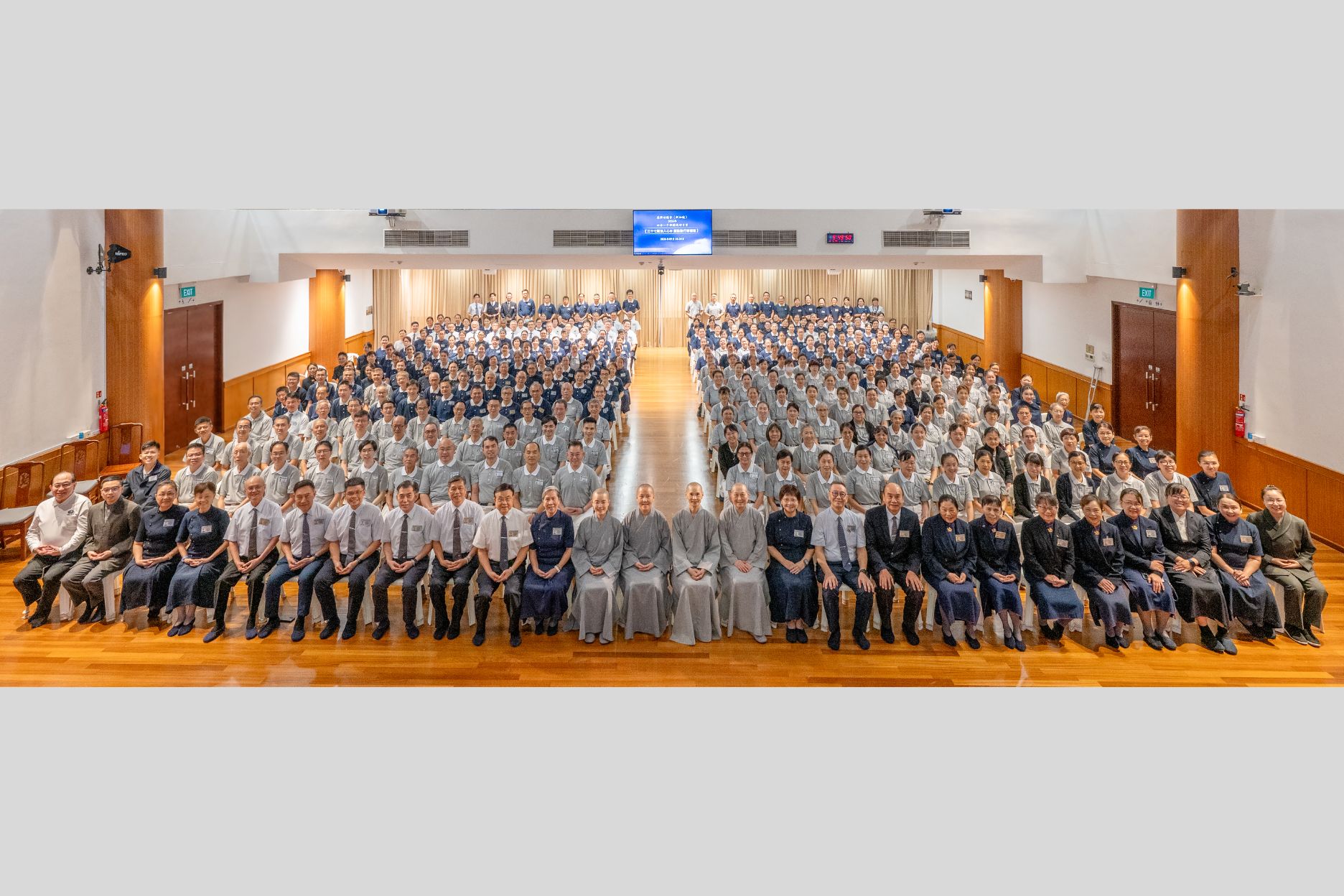
A group photo of the monastics, speakers and all participants. (Photo by Lai Tong Heng)
(Article written by Yaw Huey Xin, Lee Beng Hwee, Moo Chui Mei, Goh Lam Kia, Koh Su Jing, Tang Zou Cie)
Share 


