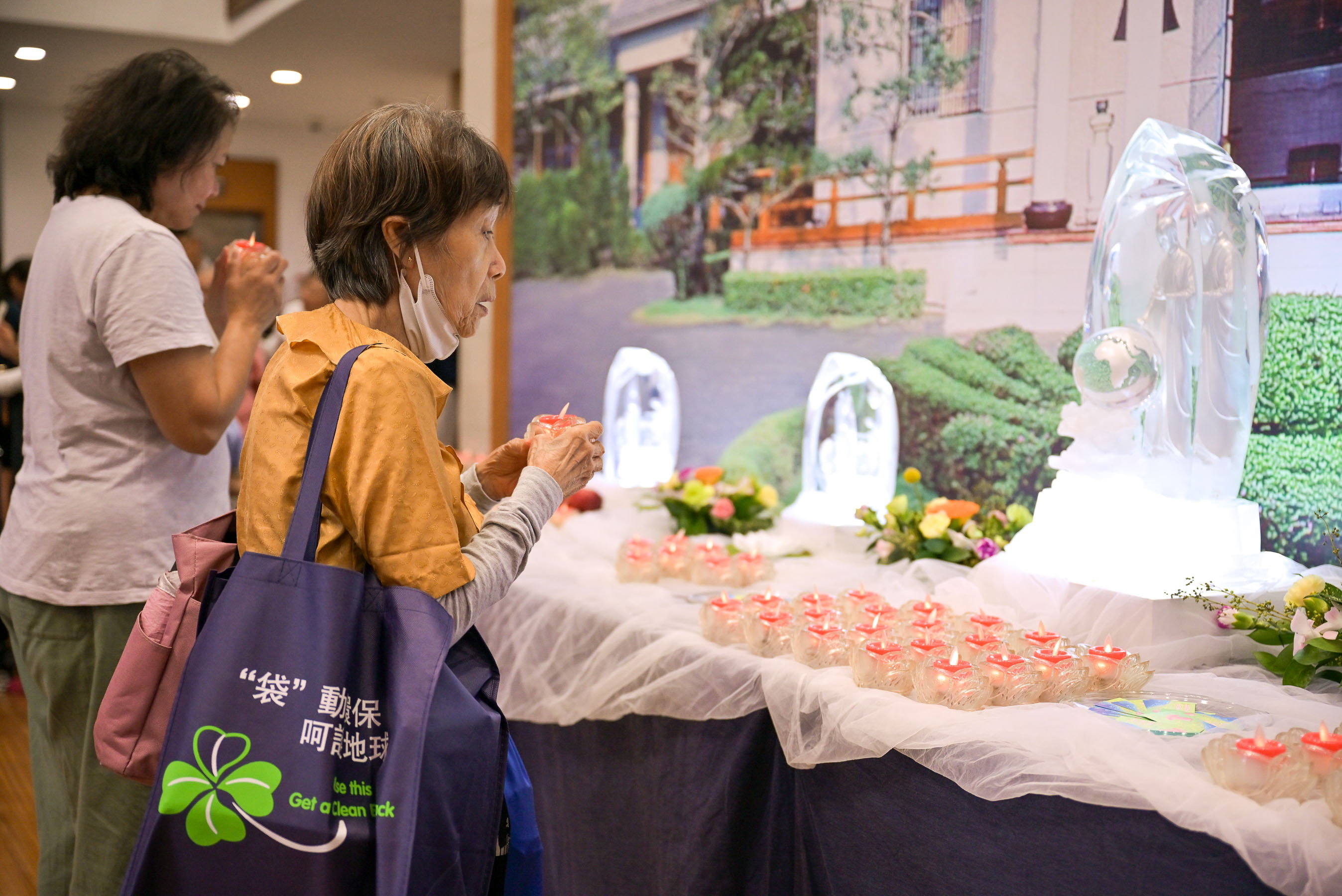
 Upon entering Jing Si Hall, visitors are greeted by a prayer area where they can light lotus-shaped lamps and offer their sincere prayers. (Photo by Goa Yee Boon)
This year, the Auspicious Seventh Lunar Month Prayer Ceremony centred on the theme of “Promoting Filial Piety and Cultivating Right Faith for Protection”, returning to the true teachings of Buddhism and helping the public understand that the seventh lunar month is a time for gratitude, repaying kindness, and doing good, rather than simply a “Ghost Month”.
The annual Auspicious Seventh Lunar Month Prayer Ceremony was held at Jing Si Hall on 15 August 2026. Across three prayer sessions, the event featured the Jing Si Humanistic Interactive Zone, prayers before the Buddha, vegetarianism to protect life, theatrical and sign language performances, as well as a tea-serving ceremony.
The event encouraged participants to rediscover the seventh lunar month through right faith and right mindfulness, cultivating compassion through filial piety, protecting life, and doing good, while incorporating gratitude and wholesome intentions into their daily lives.
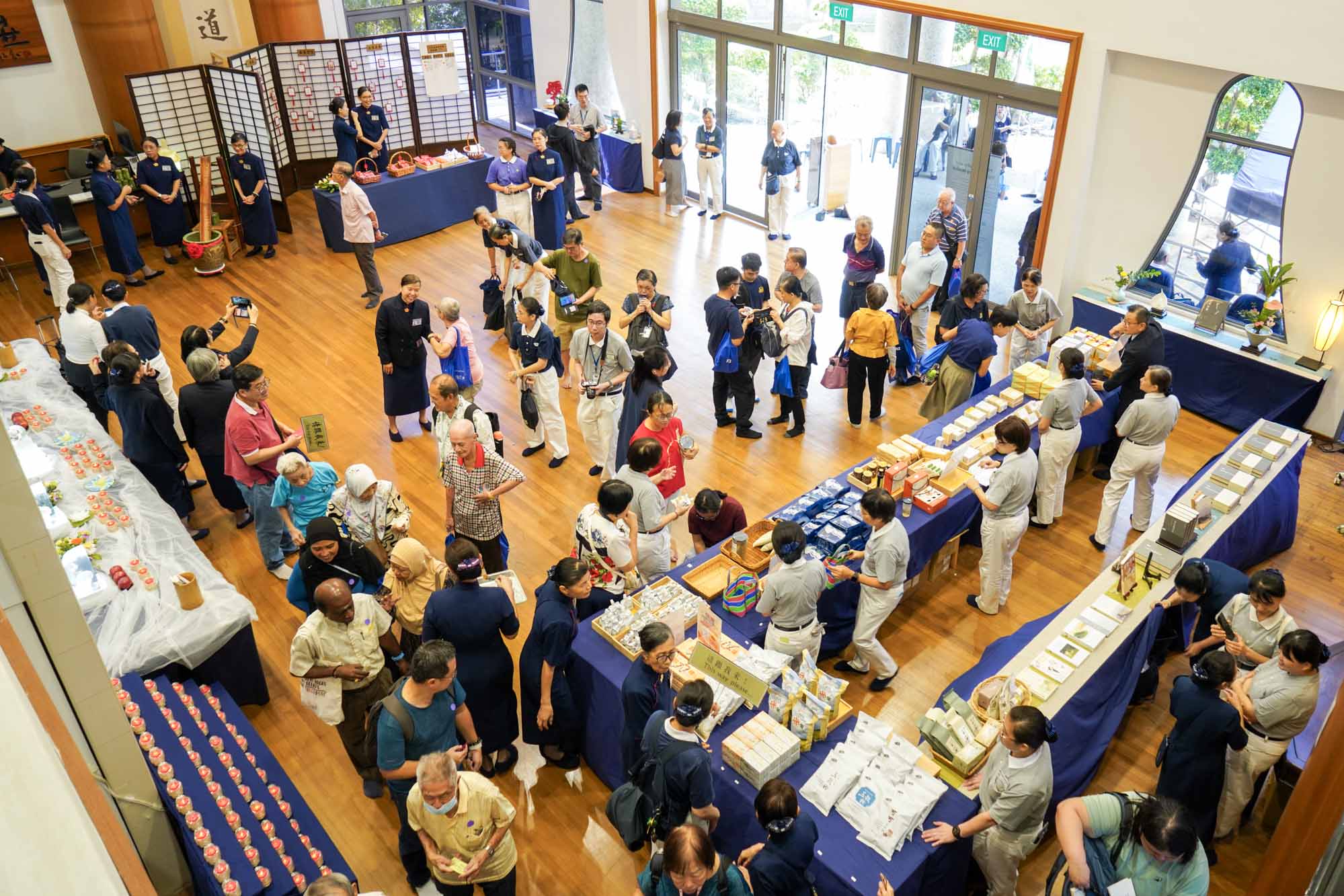 The Auspicious Seventh Lunar Month Prayer Ceremony featured fringe activities promoting vegetarianism, Jing Si humanistic culture, and prayers before the Buddha, attracting more than 600 attendees across the three sessions. (Photo by Chan May Ching)
Knowing, Appreciating and Repaying Kindness: Filial Piety Must Be Put Into Action
To promote filial piety, Tzu Chi’s Great Love Mother Fellowship, a team that brings Jing Si Aphorisms education and humanistic programmes into schools, presented the stage performance titled The Filial Little Compassionate Bird. Centred on the themes of knowing, appreciating and repaying kindness, the story tells of a father and mother bird who work tirelessly to raise their four young birds.
As the young birds grow up and their parents become elderly and require care, each makes a different choice. Some leave home to pursue their ambitions, while others recognise their parents’ sacrifices but fail to spend time with them when it matters most. Only the Little Compassionate Bird chooses to stay behind and care for its parents through concrete actions.
The different choices made by the four birds offer a reflection on what filial piety truly means: recognising the sacrifices our parents have made is knowing kindness; keeping that gratitude in our hearts is appreciating kindness; and being there to care for our parents when they need us and putting filial piety into action is repaying kindness.
If The Filial Little Compassionate Bird reminds us that repaying kindness requires action, the simple act of offering a cup of tea brings filial love back into every family.
During last year's Buddha Bathing Ceremony, volunteer couple Lim Boon Lee and Leong Lai Yen brought their mother and children to take part in the tea-offering ceremony for the first time. The solemn yet heart-warming experience prompted Lim to reflect on the meaning of filial piety. In the past, he believed that giving his mother a comfortable life and taking her on overseas holidays was a way of showing filial devotion. Now, however, he has come to realise that for elderly parents, sincere companionship is often more precious than material comforts.
This year, the family returned to Jing Si Hall for the Auspicious Seventh Lunar Month event. Having been participants the previous year, the couple now took part in the preparations and volunteer service, transforming last year's inspiration into this year's commitment. During the tea-offering ceremony, their child respectfully offered tea to his father with both hands, and affection flowed naturally through a cup of tea and a warm embrace.
The couple hope to lead by example and help their children understand that whenever one has the ability to give, one should put compassion into action, and learn to be filial and kind through participating in such events.
-
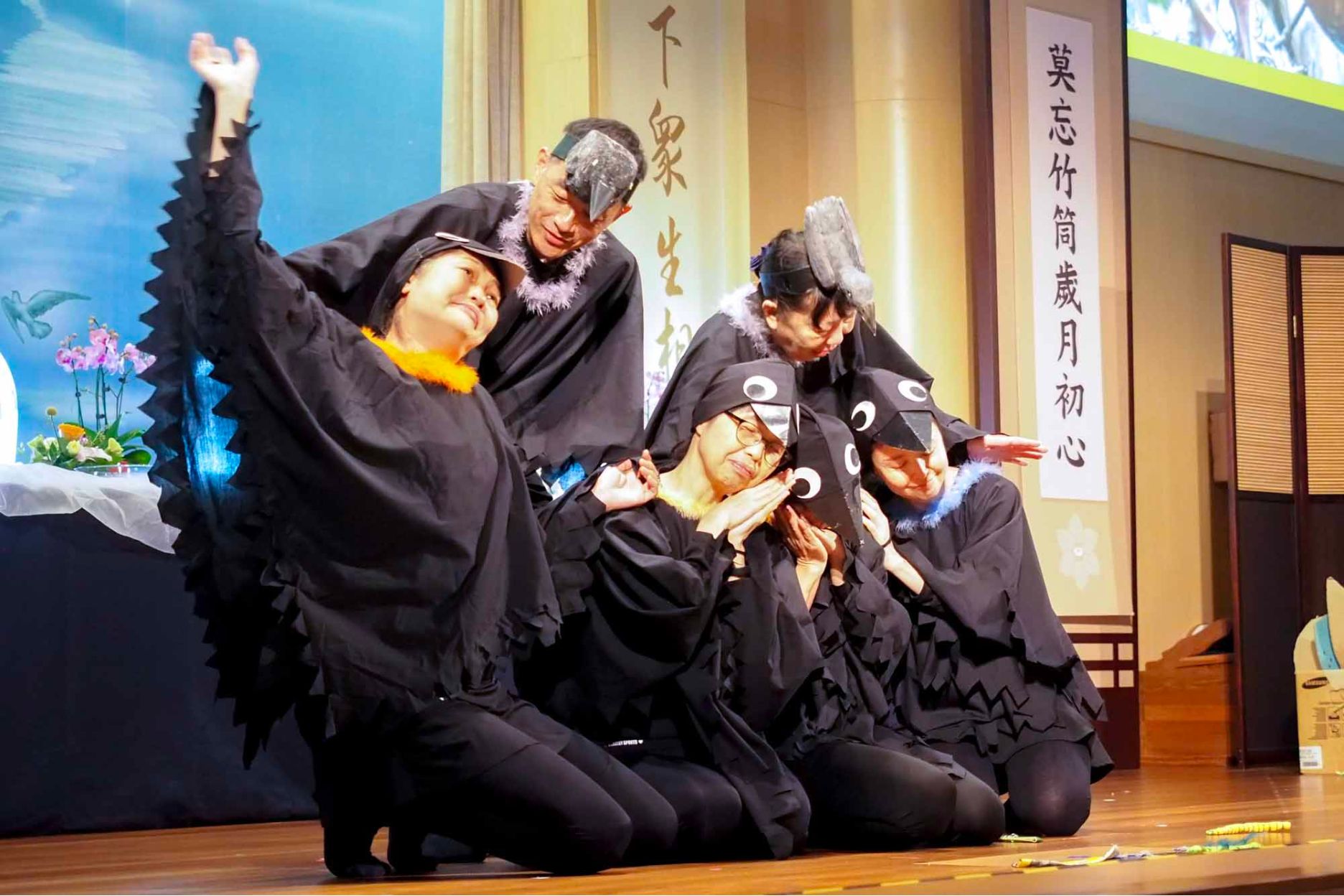 Using a heart-warming storyline, The Filial Little Compassionate Bird conveys the message that acts of filial piety and kindness should not be delayed. (Photo by Teo Moh Sang)
 -
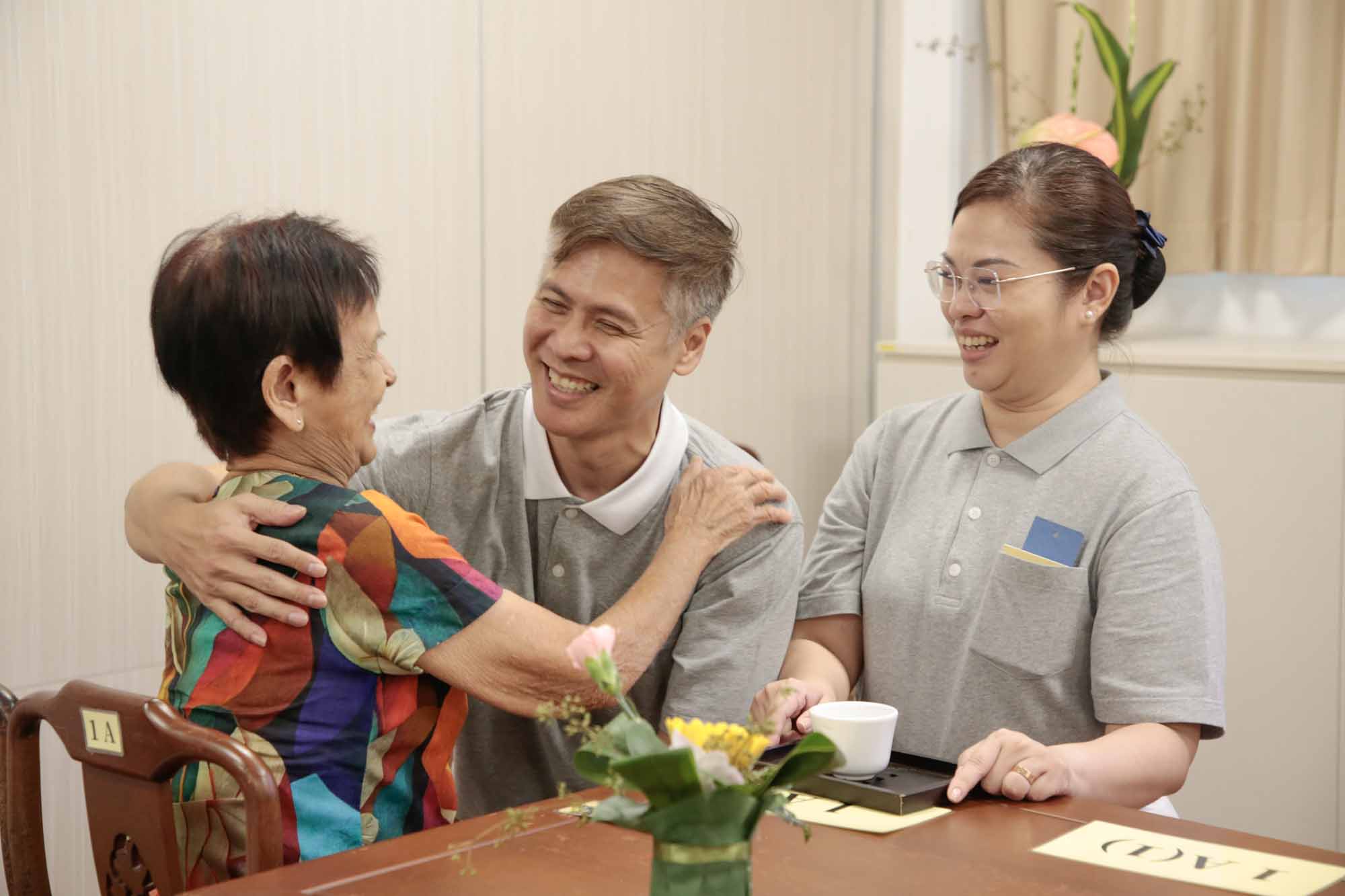 Lim Boon Lee (left) and his wife Leong Lai Yen (right) brought their mother and children to take part in the tea-serving ceremony as an expression of filial piety. A warm embrace between mother and son conveyed their deep affection. (Photo by Fong Kwai Kin)
 -
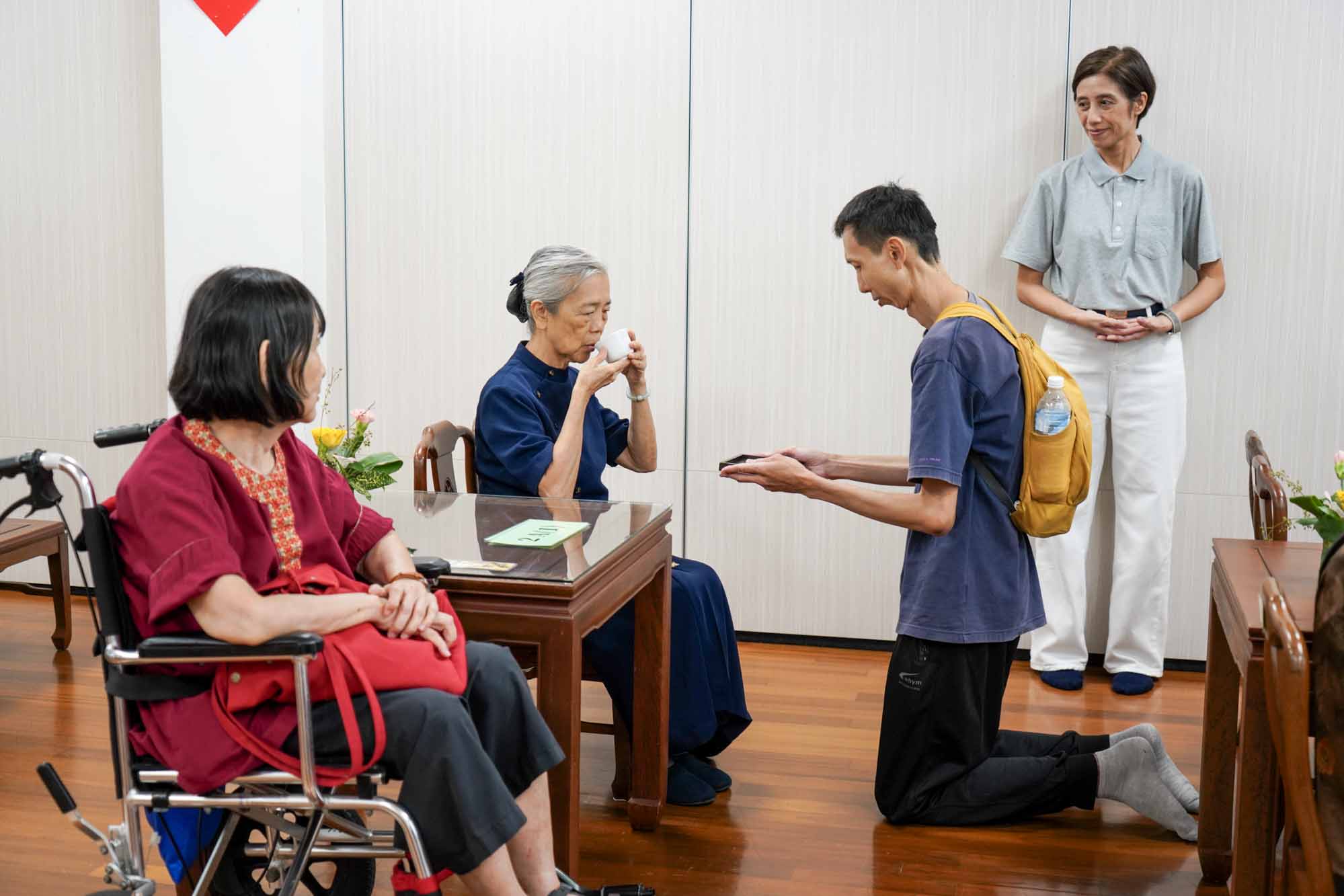 Lee Boon Chuan (right) serves tea to his mother, Goh Siew Eng (seated in a wheelchair), and his aunt, Goh Mei Eng. (Photo by Chan May Ching)
Another person who puts filial piety into practice in his daily life is Lee Boon Chuan. As an only child, he is deeply aware that “we never know whether tomorrow or impermanence will arrive first”. Every week, he sets aside one or two days to visit his mother, Goh Siew Eng, at the nursing home, taking her for walks or accompanying her on shopping trips in her wheelchair. To him, companionship is not only about cherishing one’s blessings, but also of cultivating blessings. Guided by the Buddhist concept of the Four Great Debts of Gratitude (note), caring for and accompanying his mother is also a natural way of repaying her kindness. Reflecting on life’s impermanence, Lee believes that only by cherishing the present and expressing love in time can one avoid leaving behind regrets.
This year, besides serving tea to his mother, he also served tea to his aunt, Goh Mei Eng, who had extended a helping hand when his mother needed support the most. Through this gesture, he extended his filial piety to include gratitude and the repaying of kindness. The touching moment also moved many members of the audience.
After watching The Filial Little Compassionate Bird, Goh Siew Eng was deeply touched by its message that acts of kindness and filial piety should not be delayed. Although her parents have passed away, she now takes the initiative to assist the nurses in caring for other elderly residents at the nursing home, transforming her gratitude towards her parents into acts of kindness towards others.
One Good Thought Inspired by a Jing Si Aphorism
Upon entering the Jing Si Hall, members of the public held lotus-shaped lamps in their hands as they reverently paid homage before the lucite Buddha statue. Among them was Qiu Zhi Hong, who drew a Jing Si Aphorism from a bamboo container placed nearby: “When misunderstood, respond with understanding; when wrongly accused, choose to let it go.”
The words helped her release the hurt she had been holding onto after being misunderstood by her family. They also led her to realise that “parents are living bodhisattvas, and the true place of spiritual practice is at home.”
For Qiu, dedicating acts of love and kindness to her ancestors is the best way to repay their kindness, while being filial to her parents is one of the most meaningful ways to practise kindness. A vegetarian for more than 20 years, she also hopes to translate her respect for all life into every kind thought and good deed in her daily life.
At the Jing Si Humanistic Interactive Zone, visitors received red Jing Si Aphorism cards. After drawing a card, they placed it under one of three corresponding themes: filial piety, adopting a vegetarian diet to protect life, or right faith and right mindfulness. They were then invited to pause and reflect: “Which of these would I most like to put into practice today?” — turning good intentions into action.
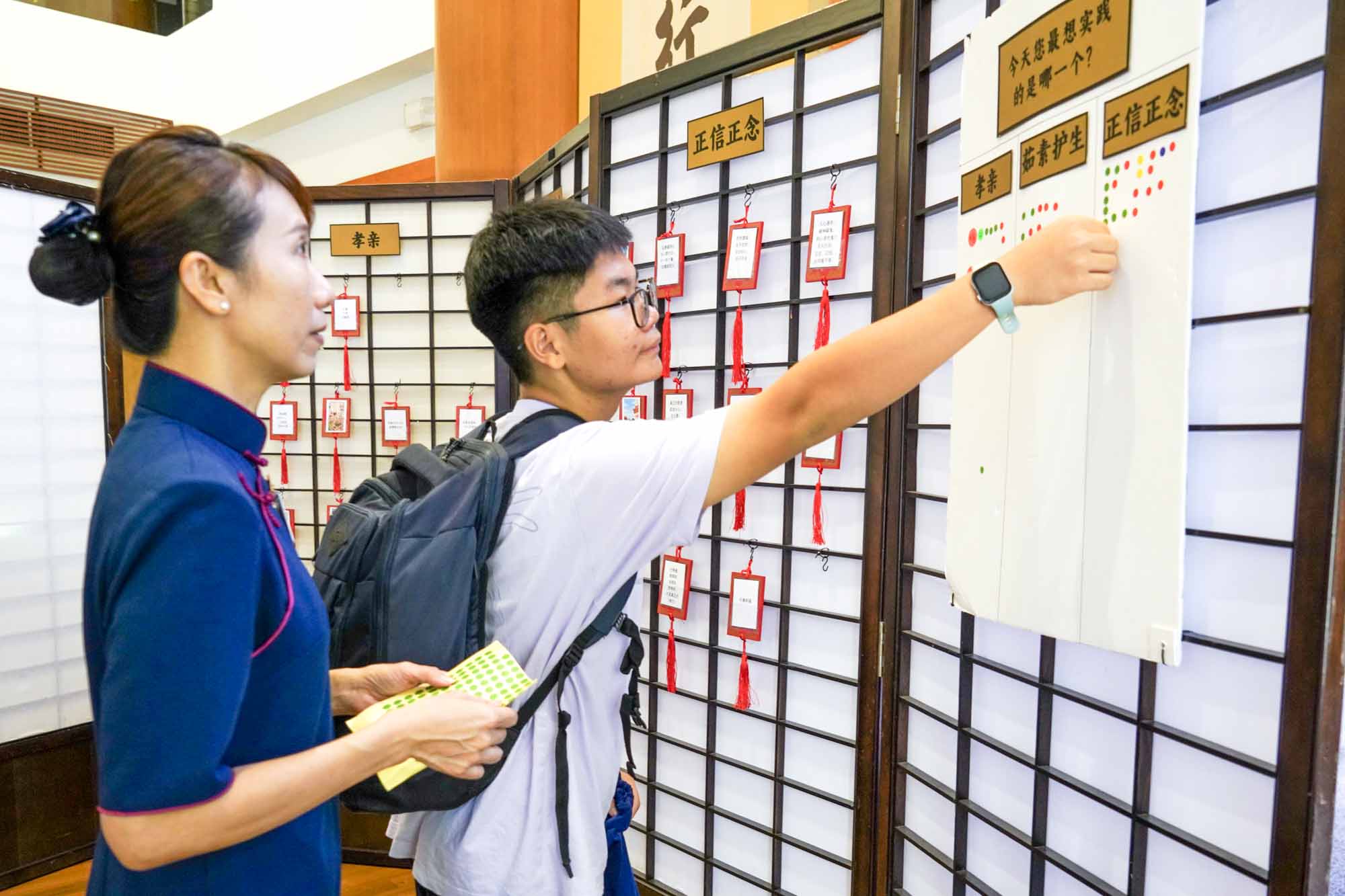 Visitors place stickers under the theme they most wish to put into practice that day. (Photo by Chan May Ching)
For Dharma Master Man Hui, who was attending the Auspicious Seventh Lunar Month event for the first time, shared that the true meaning of the seventh lunar month from a Buddhist perspective lies in filial piety, gratitude and doing good, not superstition or the burning of paper offerings.
He explained that Buddhism advocates right faith, right view and right mindfulness, encouraging people to cultivate good thoughts, speak kind words, and do good deeds instead of burning ritual offerings. By directing resources towards acts of kindness such as charitable giving, disaster relief, and environmental protection, people can truly inspire goodness in others and help more people understand that the Auspicious Seventh Lunar Month is a time to cultivate wholesome thoughts and put gratitude into action.
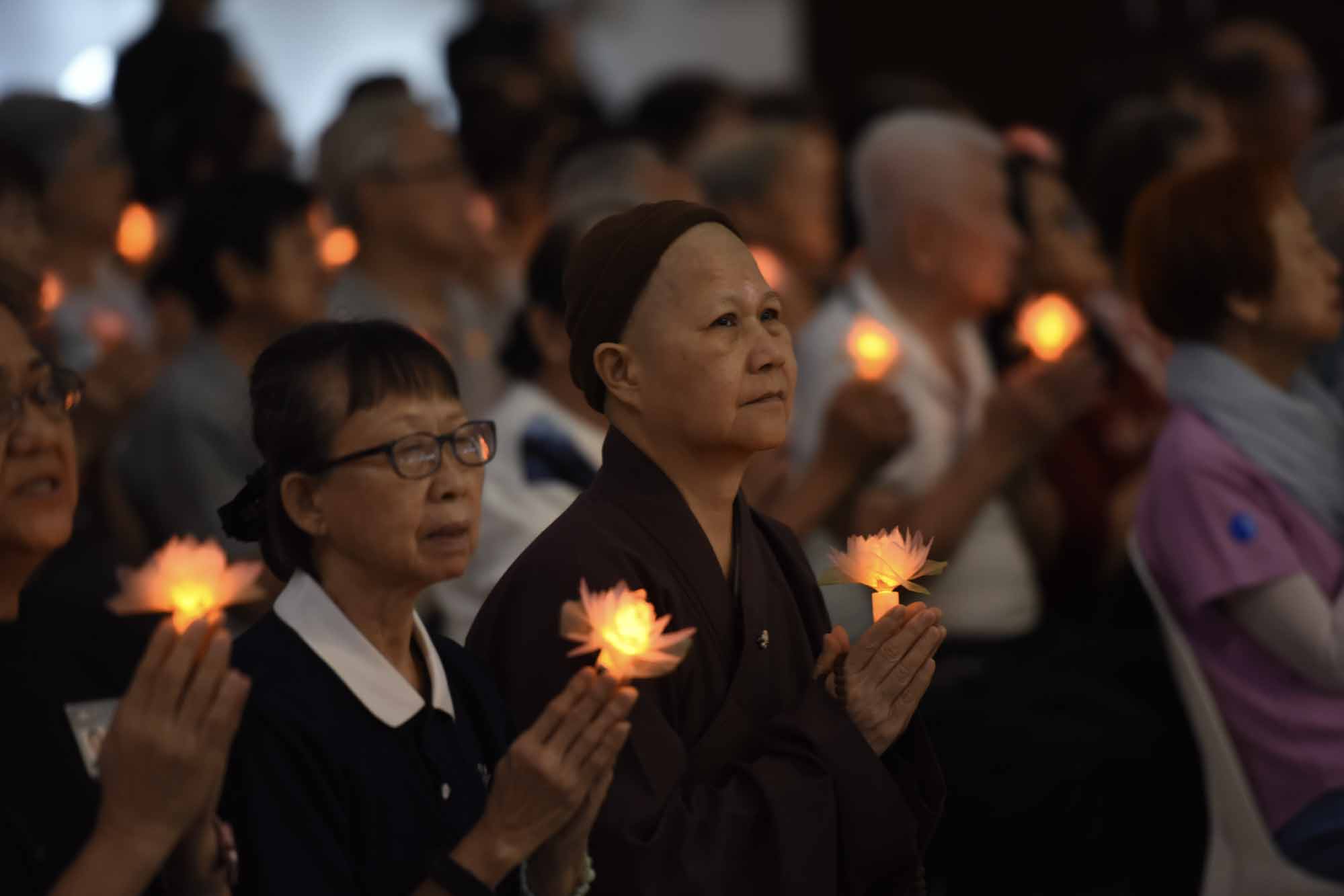 Dharma Master Man Hui (centre) believes that the Auspicious Seventh Lunar Month event can inspire kindness in people. (Photo by Goh Shoo Weng)
Buddhist Chanting and Vegetarianism: Bringing Goodness into Daily Life
During the hour-long prayer session, the sound of the Buddhist chant “Thus Have I Heard” filled the Buddha Hall. Fifteen volunteers led participants in a vitality workout, guiding them to stretch and move with the rhythm while harmonising body and mind. By combining Buddhist chanting with physical exercise, the session offered another way to connect the Dharma with daily life, strengthening the body through movement while calming the mind through stillness.
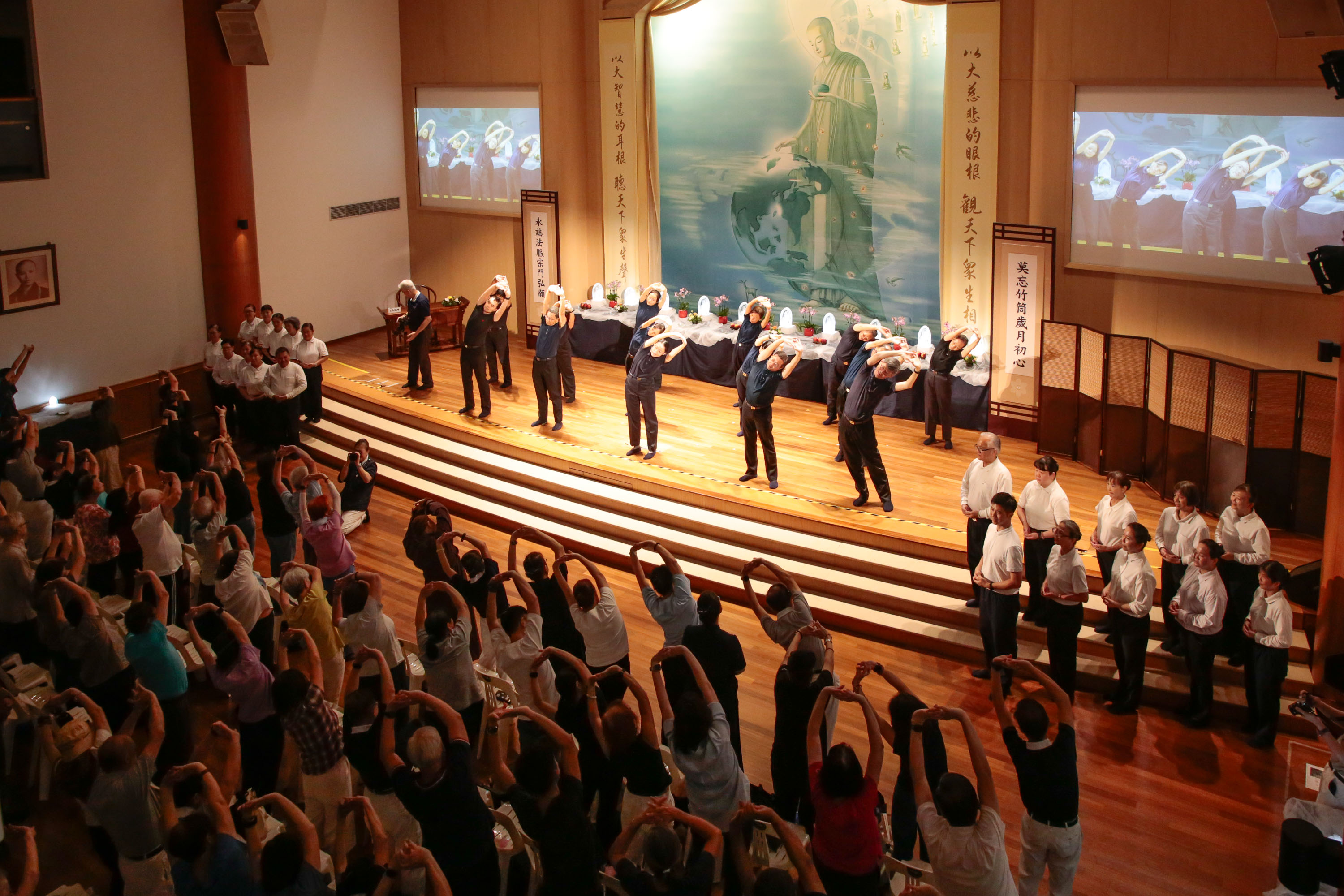 The “Buddhist Chanting Vitality Workout”, which combines Buddhist chanting with physical stretching, guides participants to exercise and learn the Dharma amid the soothing sounds of Buddhist chants. (Photo by Goh Shoo Weng)
Meanwhile, the vegetarian food promotion area featured a colourful selection of thoughtfully prepared dishes, including brown sugar oat cake, colourful Jing Si Rice Balls, Jing Si Herbal Tea and fruit soup. Recipes and QR codes were displayed alongside the food, allowing visitors to bring vegetarian cooking ideas home and extend their practice of protecting life beyond the event and into their daily routines.
When people bring home the Dharma wisdom they have heard at the Jing Si Hall, the warmth of filial love they have experienced, and the compassionate aspiration to protect life that has arisen in them, and carry these values into their families, neighbourhoods and communities, right faith and right mindfulness become more than fleeting thoughts held during prayer. They can truly take root in the heart and be translated into action.
Note: Four Great Debts of Gratitude refers to the debt of gratitude to the Triple Jewels, our parents, all sentient beings, and the nation.
Share